
Choosing the right thermostat for your home affects both your comfort and your monthly energy bills. Traditional thermostats offer basic temperature control at a low price, while smart thermostats provide advanced features like remote access, learning capabilities, and energy tracking through your smartphone. Smart thermostats typically cost between $100 to $300 and can reduce your heating and cooling costs by 10% to 15%, while traditional models cost under $50 but require manual adjustments and lack automation.
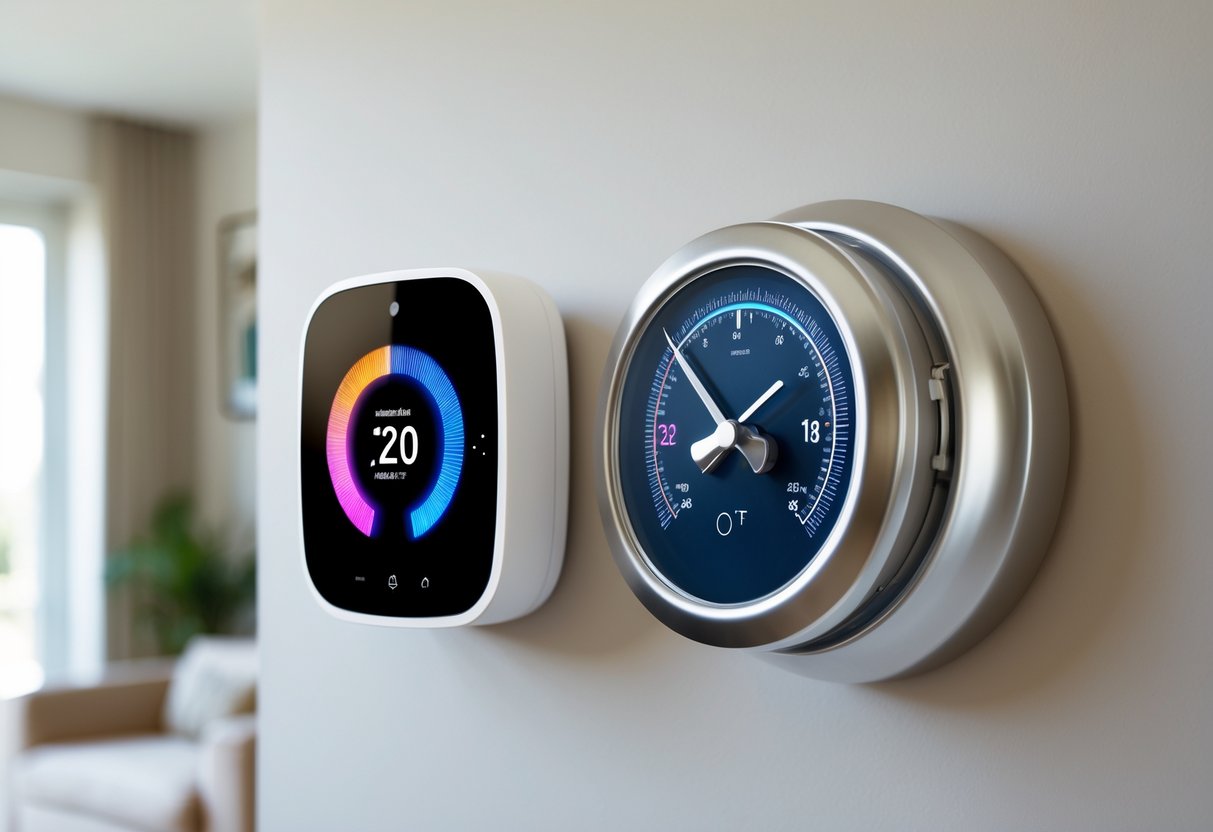
The decision comes down to your budget, lifestyle, and how much control you want over your home’s climate. Smart thermostats learn your schedule and adjust automatically, while traditional models need you to change settings by hand. Both options can keep your home comfortable, but they work in very different ways.
This guide breaks down the real differences between smart and traditional thermostats. You’ll learn about installation costs, energy savings, features, and which option makes sense for your home and budget in 2026.
Key Takeaways
- Smart thermostats cost more upfront but can save 10% to 15% on energy bills through automation and learning features
- Traditional thermostats are simple and affordable but require manual adjustments and lack remote control capabilities
- Your choice depends on your budget, tech comfort level, and whether you value convenience and energy tracking over simplicity
What Is a Traditional Thermostat?
A traditional thermostat is a device that controls your home’s heating and cooling system without connecting to the internet. You mount it on your wall, and it reads the temperature in your home to turn your HVAC system on or off.
How Traditional Thermostats Work
Traditional thermostats use basic technology to monitor and adjust your home’s temperature. When the room gets too warm or too cold, the device signals your heating or cooling system to turn on or off. You need to be physically present at the thermostat to make any changes.
These devices come in two main types:
- Manual thermostats: You adjust the temperature by hand whenever you want it warmer or cooler
- Programmable thermostats: You can set different temperatures for different times of the day or week
Common Use Cases
Traditional thermostats work well in specific situations. They’re a good choice if you have a tight budget, since they cost less than smart models. You might prefer one if you have an older HVAC system that isn’t compatible with newer technology.
Many homeowners choose traditional thermostats when they don’t have reliable Wi-Fi or prefer simple controls. If you maintain a consistent daily schedule, a programmable traditional thermostat can meet your needs without extra features.
These devices don’t require software updates or professional setup. You can usually install them yourself without technical knowledge. They also avoid security risks that come with internet-connected devices since they operate independently from your home network.
What Is a Smart Thermostat?
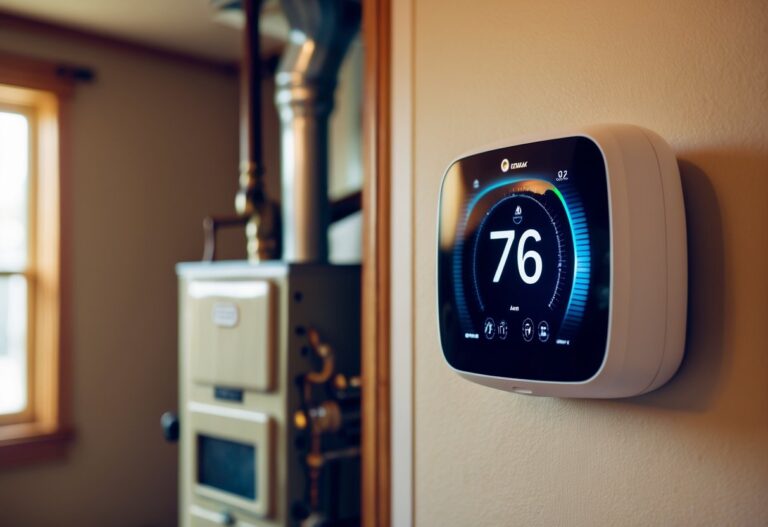
A smart thermostat is a device that controls your home’s heating and cooling system through Wi-Fi connectivity and advanced technology. Unlike basic thermostats, it connects to your home network and allows you to adjust temperature settings from anywhere using your smartphone.
These devices use sensors and learning algorithms to understand your daily routines and preferences. Over time, they automatically adjust your home’s temperature based on when you’re home, when you’re away, and what temperatures you prefer at different times.
Smart thermostats offer several key features that set them apart:
- Remote control through mobile apps
- Wi-Fi connectivity for internet access
- Learning capabilities that adapt to your schedule
- Integration with other smart home devices
- Voice control through assistants like Alexa or Google Assistant
- Energy usage reports and tracking
The learning function is one of the most useful features. Your thermostat watches your temperature adjustments and creates a schedule automatically. This means you don’t have to program it manually like older models.
You can control your smart thermostat from your phone whether you’re at work, on vacation, or just in another room. This remote access lets you make changes instantly and check your home’s temperature from anywhere.
Many smart thermostats also include geofencing technology. This feature detects when you leave home or return based on your phone’s location. Your thermostat can then adjust temperatures automatically to save energy when you’re gone and ensure comfort when you’re heading back.
Key Differences Between Smart and Traditional Thermostats
The main difference between these two types of thermostats comes down to technology and features. Traditional thermostats have basic manual controls that let you set a temperature. Smart thermostats connect to Wi-Fi and use sensors and learning systems to control your home’s temperature automatically.
Smart thermostats can be controlled from your phone no matter where you are. Traditional thermostats require you to walk up to them and make changes by hand. This means you can’t adjust your home’s temperature when you’re away if you have a traditional model.
Here’s how they compare:
| Feature | Traditional Thermostat | Smart Thermostat |
|---|---|---|
| Price | Under $50 | $100-$400+ |
| Installation | Simple DIY | DIY or professional |
| Energy Efficiency | Basic | Advanced with learning |
| Control Options | Manual only | Phone app and manual |
| Scheduling | Basic programmable | Automatic learning |
| Remote Access | No | Yes |
| Smart Home Integration | No | Yes |
Both types let you program temperature settings for different times and days. However, smart thermostats make this much easier and can learn your habits over time.
Smart thermostats offer features like geofencing, which detects when you leave or come home. They can also work with other devices like smart speakers and lights. Traditional thermostats don’t have these options.
The choice depends on your budget and what features matter most to you. Traditional thermostats work fine if you want basic temperature control. Smart thermostats give you more control and can help save on energy bills.
Energy Efficiency and Cost Savings
Smart thermostats adjust heating and cooling automatically based on your schedule and preferences. They use sensors and learning algorithms to optimize temperature settings throughout the day. Traditional thermostats require you to manually change the temperature each time you want adjustments.
The U.S. Department of Energy reports that you can save up to 10% annually on heating and cooling with proper thermostat programming. Smart models often exceed this through real-time adjustments and occupancy detection.
Average Annual Savings:
| Thermostat Type | Estimated Savings |
|---|---|
| Traditional (manual) | $0-$50 |
| Traditional (programmable) | $50-$100 |
| Smart | $100-$180 |
Your actual savings depend on factors like your local energy rates, home size, and current energy usage. Smart thermostats typically pay for themselves within 2 to 5 years through reduced utility bills.
Many utility companies offer rebates for smart thermostat purchases. These rebates range from $50 to $200 per device in 2025. Some states also provide tax credits for energy-efficient home upgrades.
Traditional thermostats cost less initially but don’t actively work to reduce your energy consumption. They maintain the temperature you set without adjusting for empty rooms or changing weather conditions. Smart thermostats can detect when you leave home and automatically adjust temperatures to save energy.
The efficiency gap between these options matters most if you have irregular schedules or frequently forget to adjust your thermostat. Smart models handle these adjustments automatically, while traditional ones waste energy heating or cooling an empty home.
Features and Smart Capabilities
Smart thermostats include features that traditional models can’t match. You can control them from your phone, set custom schedules, and track your energy use in real time. Traditional thermostats only let you set a temperature manually.
Learning algorithms make smart thermostats stand out. A learning thermostat watches your habits and adjusts temperatures without you doing anything. The Nest Learning Thermostat learns when you wake up, leave for work, and go to sleep. After about a week, it creates a schedule that fits your routine.
Voice assistants work with most smart models. You can tell Alexa or Google Assistant to change the temperature while you’re cooking or getting ready for bed. Ecobee and Honeywell Home thermostats both support voice commands.
Remote sensors help some smart thermostats monitor different rooms. This matters if your bedroom is always colder than your living room. Ecobee includes a sensor in the box, while other brands sell them separately.
| Feature | Smart Thermostat | Traditional Thermostat |
|---|---|---|
| Remote Control | Yes | No |
| Learning Capability | Yes | No |
| Voice Commands | Yes | No |
| Energy Reports | Yes | No |
| Geofencing | Yes | No |
A premium smart thermostat might include weather tracking, humidity control, and air quality monitoring. These features help your system run better and keep your home comfortable. Traditional thermostats stick to basic heating and cooling without any extra data or automation.
Ease of Use and Convenience
Daily operation looks different for each type of thermostat. Traditional thermostats require you to walk up to the device and manually adjust settings using buttons or a dial. Smart thermostats let you control temperature from your phone, whether you’re sitting on your couch or away from home.
Mobile apps vs manual controls is where you’ll notice the biggest difference. Smart thermostats connect to Wi-Fi and give you an app for your smartphone. You can change settings from anywhere with an internet connection. Traditional thermostats limit you to making changes only when you’re standing in front of them.
Scheduling flexibility varies significantly between the two options. Both types allow you to program temperature changes for different times and days. The difference is in how easy this process is.
With traditional programmable thermostats, you’ll need to:
- Use the device’s buttons or touchscreen
- Navigate through menus on the thermostat itself
- Manually reprogram when your schedule changes
Smart thermostats make scheduling simpler through their apps. You can create and switch between multiple schedules quickly. Many smart models learn your patterns over time and adjust automatically, removing the need for constant programming.
Smart thermostats also include features like monthly energy reports and eco modes that guide you toward better efficiency. Traditional thermostats give you basic temperature control without any feedback or suggestions. This means you need more time and effort to figure out the best settings on your own.
Installation and Compatibility
Traditional thermostats are simple to install. Most work with basic two-wire or four-wire setups. You can usually replace an old model yourself in about 15 minutes with just a screwdriver.
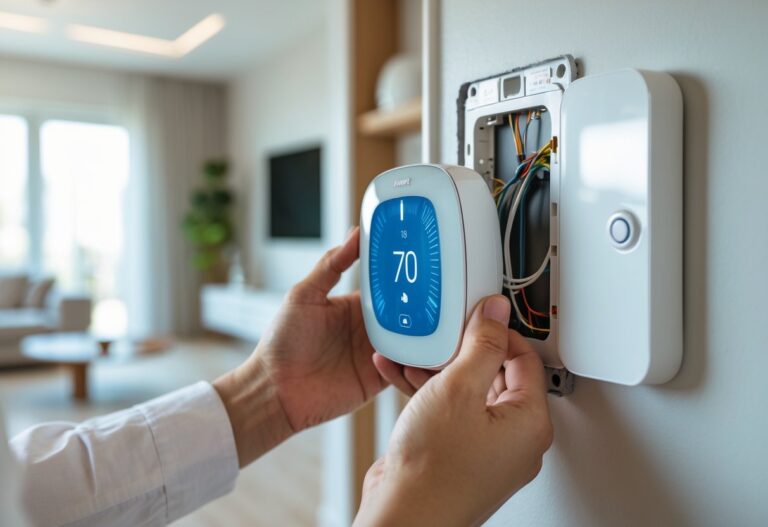
Smart thermostats have more complex wiring needs. Most require a C-wire (common wire) for constant power to run Wi-Fi and the display. If your current system lacks a C-wire, you’ll need to add one or use an adapter. Some homes have the wire already in the wall but not connected.
Wiring Requirements:
- Traditional: 2-4 wires, works with most basic heating and cooling systems
- Smart: Usually needs 5+ wires including a C-wire, requires 24V low-voltage systems
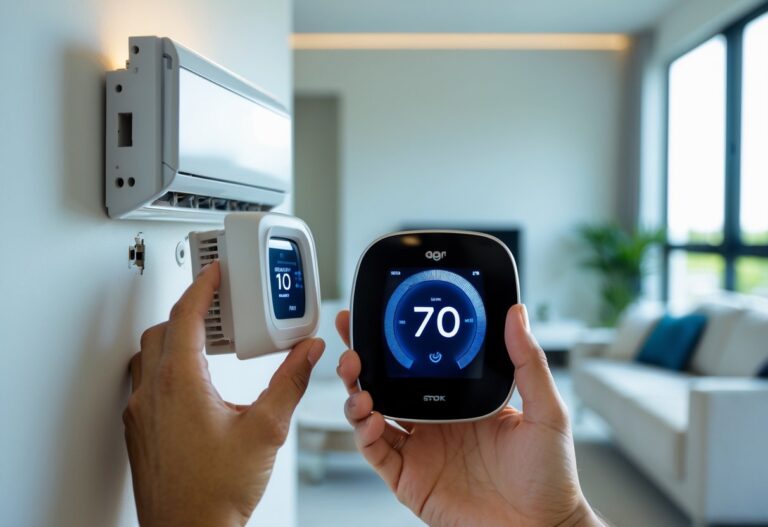
Not all smart thermostats work with every HVAC system. Your system’s age, type, and voltage determine what will be compatible. Most smart models support central heating and air conditioning, but electric baseboard heaters and some older furnaces may not work.
Before buying a smart thermostat, check the manufacturer’s compatibility tool online. You’ll need to know your system type—whether you have a furnace, heat pump, dual fuel setup, or multi-stage system.
DIY installation works for traditional thermostats and some simple smart models if you have the right wiring. Professional installation makes sense for smart thermostats when you need to run new wires, have a complex HVAC setup, or want to avoid troubleshooting issues. An HVAC technician can verify compatibility and ensure all features work correctly.
Which Thermostat Is Right for You?
Your choice between smart and traditional thermostats depends on your specific situation and priorities.
If you’re on a tight budget, a traditional thermostat makes sense. These devices cost under $50 and get the job done without fancy features. You can still program basic schedules on most models. The money you save upfront might matter more than long-term energy savings.
Tech-savvy homeowners will benefit most from smart thermostats. You can control your home temperature from your phone, integrate with voice assistants, and let the device learn your habits. The features like geofencing and energy reports give you detailed control over your home’s climate.
Renters and apartment dwellers should consider a few factors before upgrading. Check with your landlord before installing any thermostat. If you get approval, smart thermostats are easy to uninstall when you move. Traditional thermostats work fine if you plan to stay short-term or don’t want to invest in a property you don’t own.
Large households with varying schedules can gain a lot from smart thermostats. These devices adjust temperatures based on who’s home and when. Remote sensors help balance temperatures across different rooms. Multiple family members can control settings through their phones.
Think about your HVAC system compatibility too. Most smart thermostats work with standard systems, but older or unusual setups might need professional installation or specific models.
Your daily routine matters as well. Do you have a regular schedule or does it change often? Smart thermostats adapt better to unpredictable patterns.
Pros and Cons Summary
Smart Thermostats offer remote control through your phone, which means you can adjust your home’s temperature from anywhere. They learn your schedule over time and make automatic adjustments to save energy. You can expect about 10% savings on your electric bill.
These devices work with voice assistants and other smart home products. The apps are usually easy to navigate once you get used to them.
However, smart thermostats cost between $100 and $250, compared to basic models at $20. Installation can be tricky if your home doesn’t have a C-wire for power. You might need to hire someone to install it properly.
They also raise privacy concerns since they collect data about your habits. If you’re always home or move frequently, you won’t see much benefit from the learning features.
Traditional Thermostats are simple and affordable. You don’t need a smartphone or internet connection to use them. There are no security risks from hackers or data collection.
Installation is straightforward, and most people can do it themselves. They work reliably without software updates or apps to manage.
The downside is you can’t control them remotely. You have to walk over to the wall every time you want to make a change. Programmable models exist, but they’re harder to set up than smart versions.
Traditional thermostats don’t learn your patterns or suggest ways to save energy. This means you’ll likely use more electricity than you would with a smart option.